The throughline
Across all three workstreams, the approach was the same: move error detection upstream — catch mistakes where users still have context and control, not after the system has processed the data.
Product configuration

Replaced spreadsheets with structured, validated input while keeping the familiar table-editing model
Decision log
My first prototype was a 50+ field intake form — one entry per product. Immediate rejection in testing: "Too cumbersome." Rather than iterate on a fundamentally wrong approach, I ran field observations alongside the team to understand how the spreadsheet was actually being used. The critical finding: 95% of all maintenance is product upgrades, which touch only two fields — product status and SKU number. The solution wasn't a new form. It was replicating their existing mental model inside a reliable system: select rows, copy, paste, update two fields. Three steps. The interaction pattern was already familiar; only the reliability was new.
Order submission

Reworked a 100+ field form into a step-by-step flow with validation at each stage, plus progress indicators to ease the anxiety of not knowing form length
Order fulfillment

Real-time feedback that shows how an order will affect fulfillment before submission. Users can see issues earlier instead of finding out after the order is processed.
Employee recruiting & onboarding system
Centralized onboarding processing for ~200 new hires per year across 16+ departments, integrating PeopleSoft, Microsoft Active Directory, Oracle, and Salesforce. Automated the flow from welcome email through account provisioning — reduced error tickets by ~60%. Also automated bulk onboarding for up to 1,000+ employees from acquisitions, provisioning accounts and welcome emails in sync for Day 1 access.
InsideTIBCO knowledge hub
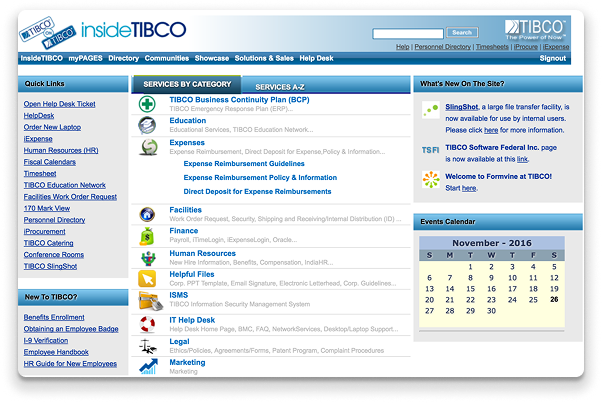
Replaced hard-to-edit templates (some requiring HTML knowledge) with professionally designed layouts and a rich-text editor — increased published content by ~40%. New contributors who previously avoided the portal meant new hires had access to accurate, up-to-date team information from day one.
Reflection: I initially assumed that approaches successful for the broader audience would also meet the needs of this group. I'd invest earlier in understanding their unique needs and challenges to design a more tailored solution.