Amazon
Livestream & real-time engagement platform
During high-visibility company-wide events, operators were discovering setup errors live — in front of up to 160,000 employees. The platform had grown across multiple tools, leading to inconsistent behavior, heavy manual coordination, and high failure risk during live events.
Beyond setup, the viewer experience needed AI-native improvements: catch-up viewing for people who joined late, and self-serve resolution for playback issues so viewers could fix problems without leaving the stream.
"If this Livestream does not play right within 2 minutes, I'm out of here!"
— Livestream viewer
160K
Concurrent viewers
60%
Faster setup
↓ 40%
Support tickets post-launch
↑ 30%
Participation rate
Key decision: Diagnosis before design
I used AI-assisted analysis of 6 months of support tickets to find the real failure points before any design work began. Issues were addressed at the workflow level instead of patching symptoms downstream.
Design highlights
Consolidated event setup, configuration, and execution into a single guided workflow

Operators can now see dependencies earlier instead of discovering issues during the event
Interaction without losing focus

Chat and reactions visible by default, easy to hide, capped to avoid overwhelming the screen
Decision log
I considered putting the chat in a pop-up — it would have freed up the entire viewport for the video player and let viewers resize it however they wanted. User testing shut that down. Viewers needed to monitor both the video and the conversation simultaneously; any extra step to surface the chat broke their focus during live moments.
AI-generated Livestream shorts
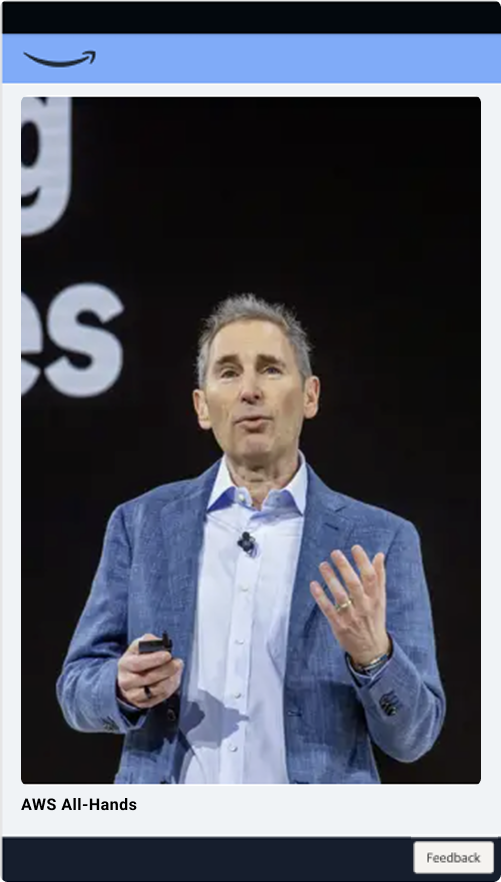
Originated and prototyped concept for AI-generated Livestream Shorts, identifying an opportunity to make a 10,000+ annual livestream library discoverable beyond the live event; proposed using AI to surface essential moments based on employee interests, with direct paths from short-form discovery into full-length events.
Event-level branding without breaking the system
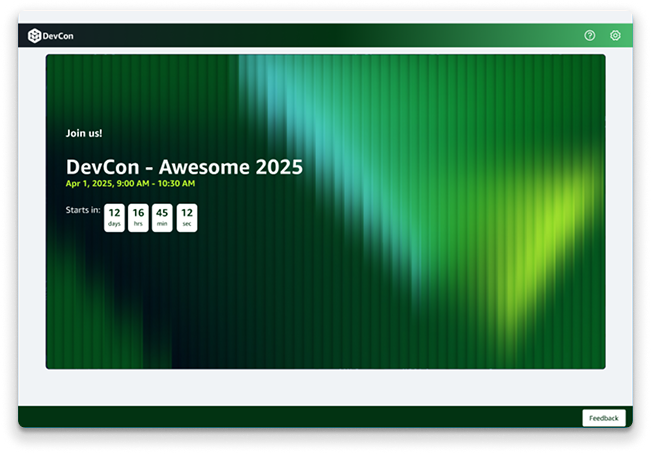
Built configurable layout regions (header, footer, and custom zones) so organizers could apply event-specific branding without modifying core components. High-profile events felt distinct while the underlying system remained consistent, eliminating one-off implementations and reducing reliance on external tools.
Also at Amazon: Meeting Room Discovery & Booking
Owned UX for Amazon's workplace reservation platform for 100K+ employees across ~1,000 meeting rooms. Cut no-show occupancy by ~40% by surfacing booking conflicts earlier in the workflow, and improved room utilization by ~65% through standardized service states and recovery patterns. Built accessibility requirements into shared patterns — contributed to Amazon's internal "Born Accessible" recognition.
Reflection: I'd invest earlier in operator shadowing during live events — real-time stress behavior differed from what tickets described.